

Best Places to Live in Australia: A UK Expat’s Guide to Cities, Suburbs and Coastal Towns
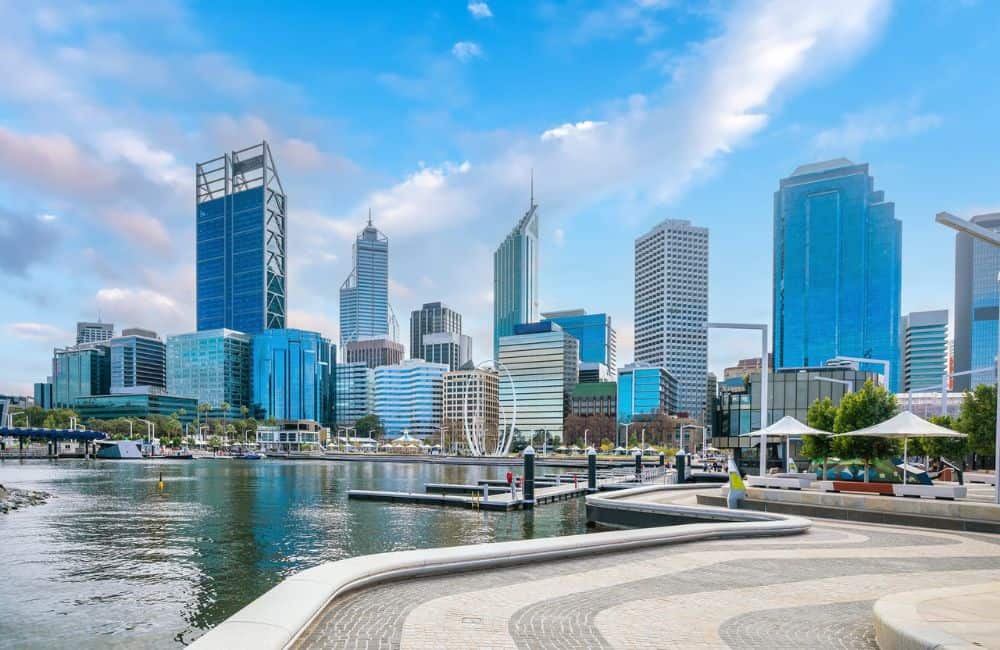
There’s no single best city to live in Australia.
Sydney offers the biggest job market, while Melbourne gives you a similar range of opportunities with somewhat less pressure on housing costs.
Brisbane and Perth can offer more space for your money, with Perth especially strong for resources and trades.
Adelaide is still attractive for a slower pace of life, but it should no longer be treated as the obvious budget choice.
Canberra makes sense for public-sector careers and can compare well on rent relative to local incomes.
After years of moving UK households to Australia, one thing is clear: the best fit comes down to what matters most to you, whether that’s work, housing costs, family life or lifestyle.
Best Cities to Live in Australia at a Glance
| City | Best For | Housing Snapshot | Main Trade-off |
| Sydney | Career depth, international connections | Highest-priced capital nationally on both rent and purchase price | Housing cost and commute time from outer suburbs |
| Melbourne | Careers, universities, culture | High absolute prices, but among the more affordable capitals on a rent-to-income basis in 2025 | Cooler, wetter winters than the northern capitals |
| Brisbane | Warm climate, a growing economy | Generally more moderate than Sydney or Melbourne, though this varies sharply by suburb | Humid, wet summers; not a beach city itself |
| Perth | Resources and trades careers, space | Prices rose sharply through 2025, overtaking Canberra’s median | Long flights to the UK and the eastern states |
| Adelaide | A steadier pace, wine regions and coastline | Also rose sharply through 2025, now above Canberra’s median | A smaller labour market than the eastern capitals |
| Canberra | Public-sector and professional careers | Overtaken by Perth and Adelaide on median price in 2025, yet among the more affordable capitals on a rent-to-income basis | A smaller social and cultural scene; cold winters |
Sources: ABS regional population estimates; National Housing Supply and Affordability Council, State of the Housing System 2026. Re-verify current price and rent figures before publishing, as housing data moves.
Best Cities in Australia: Quick Profiles
Sydney: Choose Your Suburb Around Your Workplace
Sydney is no longer a city where every major job pulls you towards the CBD. Parramatta is recognised as Sydney’s second CBD and has about 104,200 jobs, with Greater Parramatta projected to add another 45,800–52,300 by 2046, according to NSW Planning’s Sydney employment projections.
Western Sydney is growing too. The Western Sydney Aerotropolis is expected to support more than 100,000 jobs, including around 20,000 at Bradfield. If your job is in Parramatta, Westmead or Western Sydney, choosing a nearby suburb can save both money and hours of cross-city commuting.
Melbourne: Strong Growth in Healthcare, Construction and Technology
Melbourne is worth a closer look if you work in healthcare, construction or technology. Victoria expects around 303,000 new workers across metropolitan Melbourne between 2025 and 2028, according to the state’s 2025 labour market projections.
Healthcare and social assistance and construction are among the strongest growth areas, while Victoria’s industry projections point to demand for another 19,300 digital technology workers. For nurses, builders, engineers and technology professionals, that gives Melbourne a more concrete advantage than simply having a large labour market.
Brisbane: Check Flood Risk Before Choosing a Suburb
Flood exposure should be part of the suburb search in Brisbane, not something you discover after finding a house. Brisbane City Council assesses four main sources of flooding: river, creek, storm tide and overland flow.
Its FloodWise Property Report lets you check an individual address against modelled flood information and historic events. That can affect where you choose to live, what insurance costs and what further checks you make before buying or renting.
Perth: Check the Sector, Not Just the Resources Job Market
Western Australia’s resources sector remains a major source of work, but employment can move very differently from one commodity to another. The state’s 2025 resources employment data shows more than 136,000 on-site mining FTEs, with gold adding more than 5,000 jobs and iron ore more than 1,000, while lithium employment fell by roughly 3,500 and nickel was hit by project suspensions.
The roster matters too. Many resources jobs operate on fly-in, fly-out arrangements, so living in Perth may still mean spending extended periods at remote sites. WorkSafe WA’s FIFO guidance is worth reading before treating a mining role as a conventional Perth-based job.
Adelaide: A Smaller Job Market with Major Defence and Space Opportunities
Adelaide has a smaller overall labour market than Sydney or Melbourne, but defence is one area where the city has unusual depth. South Australia’s defence sector already employs more than 14,000 people, with more than 10,000 additional jobs expected over the next two decades, according to Defence SA’s workforce projections.
Submarine construction will be a major part of that growth. The South Australian Government’s defence workforce information projects 4,000–5,500 direct shipyard jobs at peak SSN-AUKUS construction, plus up to 4,000 workers building the Osborne shipyard infrastructure.
Adelaide also hosts the Australian Space Agency headquarters at Lot Fourteen, strengthening its appeal for people working in engineering, advanced manufacturing, defence technology and space-related fields.
Canberra: Strong Public-Sector Careers, but Housing Is Still Expensive
Canberra performs well on housing affordability relative to local incomes, but that does not mean homes are cheap. ACT Government figures put the median established house price at about $1.04 million, the third-highest among Australian capitals, even while the ACT compared favourably on mortgage and rent costs relative to family income. See the ACT Government’s 2026–27 housing affordability data.
UK movers should also check whether the government jobs attracting them to Canberra are actually open to them. Australian citizenship is commonly required for Australian Public Service roles, and Australian Government security-clearance eligibility normally requires citizenship unless an exception is approved. For a newly arrived British professional, that can make the private-sector job market more important than Canberra’s headline concentration of government work.
How We Judge the Best Places to Live in Australia
“Best” means different things depending on what you’re optimising for. This guide keeps four measures separate:
- Housing cost: rent and purchase price are different questions, and neither equals affordability relative to income.
- Climate: Bureau of Meteorology averages, not general reputation.
- Jobs: matched to your specific occupation via regional employment data, not a single “best city for work.”
- Healthcare access: governed by the UK-Australia reciprocal agreement and your visa status, not a blanket guarantee.
Schools and safety follow the same principle. Research them suburb by suburb using the official tools linked throughout, since neither is something a single article can responsibly rank.
Best Places to Live in Australia for Families
| Location | Housing and Commute Profile | Where to Research Schools | Main Trade-off |
| Outer Melbourne suburbs | Larger homes and gardens, with longer commutes into the city centre | My School and Victoria’s Department of Education | Commute time versus space |
| Brisbane’s northern suburbs | Detached housing generally more affordable than equivalent Sydney or Melbourne suburbs | My School and Queensland’s Department of Education | Summer heat and humidity |
| Perth’s coastal suburbs | Beach access with generally more space than equivalent eastern-capital suburbs | My School and WA’s Department of Education | Distance from family and services in the UK and eastern states |
| Adelaide suburbs | Housing costs have risen through 2025 but remain below Sydney overall | My School and SA’s Department for Education | Fewer big-employer options than Sydney or Melbourne |
| Canberra districts | Modern, planned neighbourhoods; higher entry cost | My School and the ACT Education Directorate | Cooler climate; a smaller city overall |
School quality varies by catchment, not by city, so use My School and the relevant state department as your primary research tools rather than any single article’s list. For the wider practicalities of settling children in, see our guide to moving to Australia with family.
Best Places to Live in Australia for Young Professionals and Students
Cities for Strong Job Markets and Career Growth
Sydney and Melbourne give young professionals the broadest choice of employers, but the better city depends on what you actually do. Jobs and Skills Australia’s NERO regional employment data tracks employment across around 355 occupations and 88 regions, so it is worth checking demand for your role before deciding where to move.
Brisbane has strong opportunities across healthcare and construction, while Perth stands out for resources, engineering and trades. Canberra is smaller and more specialised, with a heavy concentration of government and professional work.
Best Cities for Students and Higher Education
For students, the course and campus should come first. Sydney and Melbourne have the largest choice of universities and student communities, but they also come with higher housing costs. Brisbane can offer a better balance between university choice and living costs, while Canberra’s smaller scale can make day-to-day travel simpler.
Before choosing a city, compare accommodation near the actual campus rather than relying on average city rents. Student housing can cost very differently from the wider rental market.
Affordable Coastal Towns to Live in Australia Long-Term
Geelong, Newcastle, Wollongong and Bunbury are all worth considering if you want to live near the coast without paying inner-capital prices. But regional does not always mean cheap.
Housing costs have climbed across many coastal markets, and affordability can look very different once local wages are taken into account.
NHSAC found regional New South Wales and regional Queensland among the least affordable rental markets relative to household income in late 2025.
Before choosing a town, compare the current median rent, purchase price and typical local earnings. A home may cost less than it would in Sydney or Melbourne while still taking up a larger share of a regional salary.
Regions with Strong Job Markets and Good Housing
Some regional centres can offer a better balance between work and housing than the major capitals, especially if your job is already in demand locally.
Geelong is a strong option for healthcare, education and construction. The wider Barwon region had about 180,300 workers in February 2026, including roughly 36,400 in healthcare and social assistance. Geelong’s median home value was about $765,000 in July 2026, below Melbourne’s $829,000.
Mackay is more specialised, with strong demand linked to mining, trades and healthcare. The Mackay employment region had about 107,600 workers in February 2026, including 13,800 in mining and 11,400 in healthcare. Jobs and Skills Australia rated Mackay-Isaac-Whitsunday’s labour market as “Strong” in March 2026.
Toowoomba and the Darling Downs are worth looking at for healthcare, agriculture, transport and trades. Jobs and Skills Australia recorded about 1,400 online vacancies across the region in May 2026, including roles for registered nurses, GPs, carers and motor mechanics.
These are not automatic winners. Check your own occupation first using Jobs and Skills Australia’s NERO data, then compare current rents and purchase prices in the same region before deciding.
Most Affordable Places: Comparing Housing and Everyday Costs
A cheaper house does not always mean a more affordable place to live. Rent, purchase prices and local incomes can tell very different stories.
NHSAC’s State of the Housing System 2026 found that Adelaide and Perth saw sharp price growth in 2025, while regional Queensland remained difficult for renters relative to local incomes. Sydney and Adelaide also had the longest saving times for a 20% deposit.
Before choosing a location, compare rent, purchase prices and local earnings separately. Then add the cost of getting there. Our guide to the hidden costs of moving to Australia covers the relocation expenses that do not disappear just because you choose a cheaper city or region.
Best Places to Live in Australia for Retirees
Before comparing locations, check that you have a viable route to live in Australia. The former Retirement visa, subclass 410, is closed to new applicants, and the permanent pathway only applies to a limited group with qualifying subclass 410 or 405 status dating back to 8 May 2018.
For UK retirees who are eligible to move, Adelaide and some regional areas in New South Wales and Queensland can offer a slower pace and lower housing costs than Sydney or Melbourne. Healthcare also needs checking carefully. The UK-Australia reciprocal healthcare agreement covers medically necessary treatment, not every healthcare cost.
Our guide to moving to Australia for retirement covers the wider practical steps.
Best Places for Warm Weather and Beach Access
Perth and Brisbane are both warm, but the weather feels very different. Perth has hot, dry summers, while Brisbane is subtropical, with much more summer humidity and rainfall.
Bureau of Meteorology data for Brisbane shows average rainfall of about 140mm in January and 176mm in February. In Perth, the same months average just 15.9mm and 12.7mm, according to BOM’s Perth data.
Melbourne is cooler and more seasonal, with an annual mean maximum of about 20.5°C at Olympic Park. BOM’s Melbourne data puts the January average maximum at 26.8°C and July at 14.5°C.
If beach access matters most, Perth, the Gold Coast and the Sunshine Coast are stronger choices than Brisbane itself. Brisbane offers easy access to South East Queensland’s coast, but it is a river city rather than a beach city.
Where to Live in Australia for an Outdoor Lifestyle and Nature
Tasmania, regional Victoria and the Western Australian coast are strong choices if you want easy access to national parks, walking trails and quieter beaches without living in a major city.
The trade-off is access to work and services. Regional areas can mean fewer specialist healthcare options, longer trips to major airports and a smaller local job market. They tend to suit people who already have work arranged, can work remotely, or are moving with retirement income rather than relying on finding a broad range of jobs after arrival.
How to Check Safety Before Choosing an Australian Suburb
Safety can change significantly from one suburb to the next, so city-wide rankings only tell you so much. The best way to check an area is to use the official crime data for that state and look at the specific suburb or postcode you are considering.
In New South Wales, BOCSAR’s crime statistics allow comparisons by suburb, postcode and local government area. In South Australia, use South Australia Police’s crime statistics.
Do the same for any other state on your shortlist, and look beyond the headline crime rate. Recent trends, offence type and the size of the local population can all change what the numbers actually mean.
Choosing by Priority: A Quick Reference
| If You Prioritise | Places to Consider | What to Check |
| Affordability | Melbourne and Canberra compare well on rent relative to local incomes | Compare rent, purchase prices and local earnings. Adelaide and Perth are no longer automatically cheap. |
| Warm weather and beaches | Gold Coast, Sunshine Coast, Perth | Queensland is more humid and wetter; Perth is hotter, drier and more isolated. |
| Career opportunities | Sydney, Melbourne, Brisbane | Check demand for your occupation using NERO rather than relying on the size of the city alone. |
| Retirement | Adelaide and selected regional NSW or Queensland towns | Confirm visa eligibility first, then compare healthcare access, housing and proximity to services. |
| Outdoor lifestyle | Tasmania, regional Victoria, WA coast | Check local jobs, specialist healthcare and access to major airports. |
Expert Viewpoint: How to Choose the Right Place to Live in Australia
Start with the things that will shape your daily life: where you can afford to live, where you can realistically work, and what kind of lifestyle you want.
Then narrow the decision at suburb level. School catchments, crime, rents and commute times can vary far more within a city than city-wide averages suggest. If possible, visit at different times of year too. Perth in summer is a very different experience from Brisbane, just as Melbourne in winter feels very different from either.
It also helps to separate “cheap” from “affordable”. A lower house price does not automatically mean an area is easier to live in once local wages, rent and other household costs are taken into account.
Finally, budget for the move itself as well as life after arrival. Shipping, temporary accommodation and setup costs still apply even if you choose a less expensive city.
When you have a shortlist, our team can help you work out the practical timeline and likely moving costs for your household.
Planning Your Move to Australia
Once you have a shortlist of places, start planning the move itself alongside your visa and housing search. Our moving to Australia checklist covers the main steps, while our guide on when to book removals to Australia helps you work backwards from your intended move date.
Most household moves from the UK to Australia travel by sea, either as a shared load or in a dedicated container. Our container shipping to Australia guide explains the main options.
For current official information on visas, healthcare, tax and other practical requirements, see GOV.UK’s Living in Australia guidance.
When you are ready to organise the move, our removals to Australia from the UK service covers everything from packing to final delivery.
Frequently Asked Questions
Which is the best city to live in Australia?
The best city to live in Australia depends on your priorities. Sydney is Australia’s largest capital by population and remains its most expensive housing market, while Melbourne compares better on rent relative to local incomes. Brisbane, Perth, Adelaide and Canberra each offer different advantages for careers, housing, climate and lifestyle.
What are the cheapest places to live in Australia?
The cheapest places to live in Australia depend on how you measure affordability. In late 2025, Canberra, Darwin and Melbourne were among the most affordable capitals for new rents relative to household income. Regional New South Wales and regional Queensland were among the least affordable regional rental markets on the same measure.
What are the best places to live in Australia for families?
The best places to live in Australia for families are best chosen at suburb level. Brisbane, outer Melbourne, Perth and Adelaide are useful starting points, but the right choice depends on housing costs, school catchments and commute times. Check individual schools and current catchment boundaries before choosing an area.
What are the safest places to live in Australia?
The safest places to live in Australia cannot be ranked reliably from one national suburb-level dataset. Crime reporting differs by state, so compare the specific suburb you are considering using official state crime tools, including offence type, recent trends and population-adjusted rates rather than relying on general reputation.
Which Australian city has the best weather?
The Australian city with the best weather depends on what you prefer, but Perth is a strong choice for warm, dry summers. Brisbane is warmer and more humid, with much heavier summer rainfall. Melbourne is cooler and more seasonal, with an annual mean maximum temperature of about 20.5°C at Olympic Park.
Where should retirees live in Australia on a budget?
The best places to live in Australia for retirees depend first on visa eligibility, then on housing, healthcare and access to services. Australia’s Retirement visa is closed to new applicants. Adelaide and some regional towns have lower housing prices than Sydney, but regional New South Wales and Queensland are not automatically affordable for renters.
Do UK citizens need a visa to move to Australia?
UK citizens need an appropriate visa to move to Australia and live there long term. The right visa depends on the purpose of the move, such as skilled work, employer sponsorship, study or family. Use the Australian Department of Home Affairs Visa Finder as a starting point, then check the relevant visa requirements.
How much does it cost to move to Australia from the UK?
The cost to move to Australia from the UK depends mainly on shipment volume and service type. Shared loads usually cost less than dedicated 20ft or 40ft containers, while flights, visas and some destination or biosecurity charges may be additional. Check Simpsons’ current pricing or request a household-specific quote before budgeting.
Housing, climate and employment figures in this guide are based on the ABS, BOM, NHSAC and Jobs and Skills Australia sources cited, and change as new data is released. Confirm current figures before relying on them for your own decision. Last updated 21 August 2026.

Recommended Posts

Average Salary in Australia: What You Need to Earn to Live Well
Wednesday, 26th August 2026
How Much Money Do You Need to Move to Australia?
Wednesday, 26th August 2026

Importing a Car to Australia from the UK: Costs, Rules and Process
Friday, 17th July 2026